Bella Freud and style as a reflection of the unconscious
- Eduarda Sodré
- Jun 5, 2025
- 5 min read
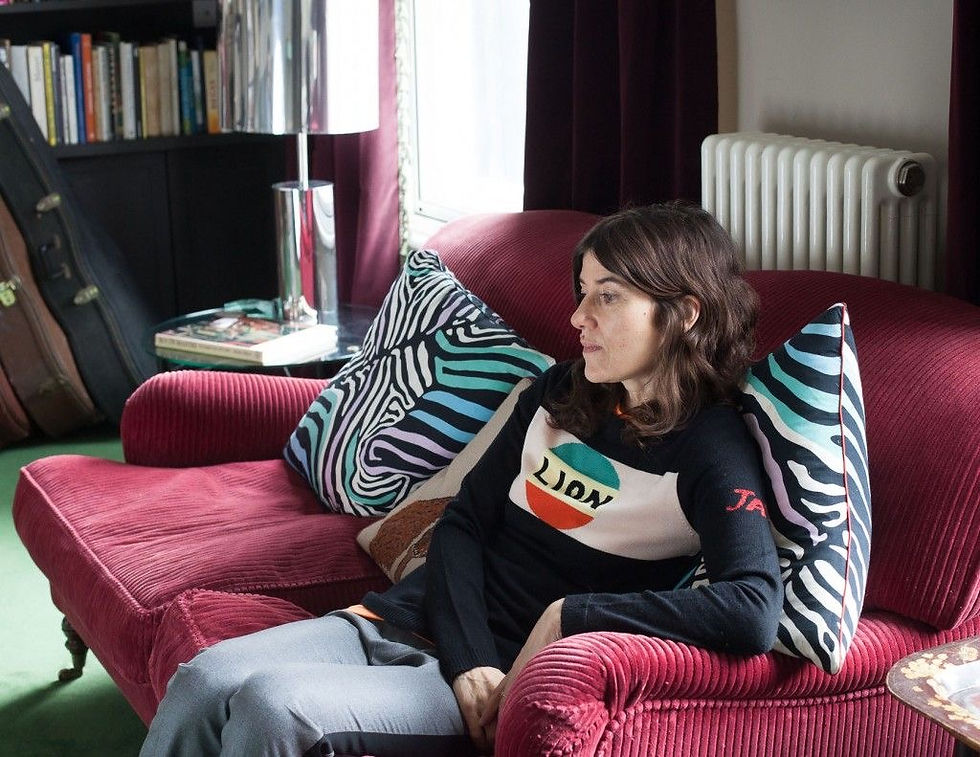
Great-granddaughter of the legendary father of psychoanalysis, Sigmund Freud, Bella Freud carries a powerful intellectual legacy in her name. But instead of following the traditional paths of clinical psychology, she charted her own course in the world of fashion without ever leaving behind the deep questions of the human mind. A renowned British designer, Bella stands out for bridging two fields that at first may seem distant: fashion and psychology. For her, the clothes we choose to wear every day go far beyond aesthetics: they are language, identity, memory, and emotion.
From childhood, Bella developed a keen awareness of dressing. She understood very early on that fashion was not just about trends but a way of communicating who we are, of protecting ourselves from the world and often even from ourselves. “What we wear says a lot about how we feel, about how we want to be seen, and about what we are trying to hide or reveal,” she says. With this complex and humanized perspective, she proposes an emotional reading of fashion, transforming the wardrobe into a mirror of the psyche.
This perspective challenges the dominant view that still associates fashion with superficiality and empty consumerism. When seen through Bella’s sensitive lens, clothing is revealed as a symbolic manifestation of emotional experiences, internal conflicts, and even unconscious defense mechanisms. Rather than simply covering the body or following trends, the act of dressing comes to be understood as a meaningful action, capable of expressing denials, desires, insecurities, or affirmations. Every choice, no matter how simple, may contain a subjective narrative. Fashion, in this context, is not trivial: it is an intimate, silent, and often therapeutic gesture.
The connection between dressing and identity construction is also central to her approach. The clothes we wear change as we go through life stages often reflecting not just changes in style but also internal transformations. During adolescence, for example, clothing can represent both the desire to belong to a group and the attempt to assert individuality. In adulthood, aesthetic choices may accompany processes of maturity, emotional upheavals, or personal reinventions. In this way, fashion becomes both witness and accomplice in the journey of self-discovery.
It was with this reflective approach that Bella brought to life the podcast Fashion Neurosis, a space where fashion and psyche meet in an unexpected and powerful way. The question that guides each episode “Why did you choose this outfit today?” serves as a starting point for deep conversations about feelings, traumas, desires, and insecurities. With each guest, the program reveals how seemingly trivial choices can uncover hidden layers of the unconscious. More than just a conversation about style, the podcast works like a disguised therapy session in which clothing opens the door to emotional stories and affective memories.
This format highlights how everyday life is crossed by meanings we often overlook. Clothing, like dreams or slips of the tongue in psychoanalysis, can contain latent symbols and messages. What we wear can be armor or vulnerability; it can reveal one facet and hide another. There is always a tension between exposure and protection, between what we want to communicate and what we want to conceal. The surface of the dressed body thus becomes a stage for emotional expression a reflection of the contradictions and complexities that inhabit the interior of each individual.
At the intersection of self and others, fashion also takes on a social role. It is not limited to individual desire but is constantly in dialogue with norms, expectations, and collective standards. While allowing personal affirmation, it also imposes challenges of belonging and recognition. What we choose to wear carries the weight of others’ judgment, of beauty conventions, and cultural codes. A subtle struggle arises between authenticity and adaptation: to what extent are we true to ourselves in the way we dress? And how much are we willing to give up in order to be accepted?
With her calm and welcoming voice, Bella transforms the act of dressing into a path of listening and introspection. Each piece a coat, a necklace, a pair of shoes is treated as a doorway into the emotional world of the wearer. In her reflections, she dismantles the idea that fashion is frivolous and reveals its power as affective language and a tool for subjective construction. Dressing, in her reading, can disguise pain or celebrate joy; it can be a symbol of resistance, an affective memory, or an attempt to reconcile with one’s own body.
This sensitive dimension of fashion also manifests in the relationship between body and clothing. The way we dress certain parts of ourselves may indicate zones of comfort or conflict, desires to hide or to show, gestures of affection or of censorship. Often without realizing it, we use clothing as extensions of touch, as protective barriers, or as ways to shape what we want to feel. When we dress the body, we also touch the psyche and in doing so, we momentarily reconfigure the way we perceive and position ourselves in the world.
When understood as an emotional gesture, the wardrobe ceases to be a collection of consumer items and becomes a space for internal elaboration. Each fabric, cut, or color may carry specific sensations, acting as a channel for emotional regulation and silent communication. Questions like “what does this piece awaken in me?” or “how does it change my presence in the space?” gain relevance in this process. In dressing oneself, a person does not merely adorn the body but affirms, protects, and revisits oneself. The body becomes a symbolic stage where identity and affection intertwine.
Psychoanalysis, with its attention to the symbolic and the unconscious, offers a privileged lens to interpret these subtle manifestations. Just as dreams can reveal repressed desires or unresolved conflicts, clothes also carry traces of personal histories, emotional references, and latent fantasies. A dress might evoke the image of a maternal figure; a jacket might refer to a rebellious phase; a shoe might symbolize strength or fragility. In this sense, the dressed body becomes a surface where emotional content gains form, texture, and presence.
In an interview with the BBC, Bella shared a memorable childhood moment: the time when, at ten years old, she wore a boy’s T-shirt and, upon looking in the mirror, felt a new kind of strength. That feeling of empowerment, born from a simple gesture, stayed with her for life. From that experience, she began to understand how dressing impacts not only how we are seen but, more importantly, how we feel and inhabit ourselves. Fashion, for her, is a path of emotional expression, a visible extension of what moves us inside.
This inaugural episode clearly illustrates how clothes can function as emotional triggers and symbolic markers of identity. The choice of a garment may not only reflect a state of mind but also provoke an internal transformation. In that gesture lies an opportunity to elaborate and give form to what we often cannot name. Fashion thus ceases to be an end in itself and becomes a means a means of self-knowledge, emotional elaboration, and reconfiguration of one’s presence in the world.
At the intersection of fashion and psychology, Bella Freud opens a fertile territory for reflection on the human condition. More than a designer, she emerges as an interpreter of the soul through fabric. Her work invites us to see dressing as a practice of self-listening, a ritual that transcends the mirror and reaches the deepest layers of the self. Fashion, in her view, is not about consumption or vanity it is about narrating who we are even when we do not fully know it yet. It is about humanity.
Hey, SF Reader! What is your outfit saying about you, even when you’re not saying anything?

Comments